
-


-


-


-


WeChat

-
whatsapp

OEM LOST FOAM CASTING PROCESS - INTRODUCTION
2026-08-03
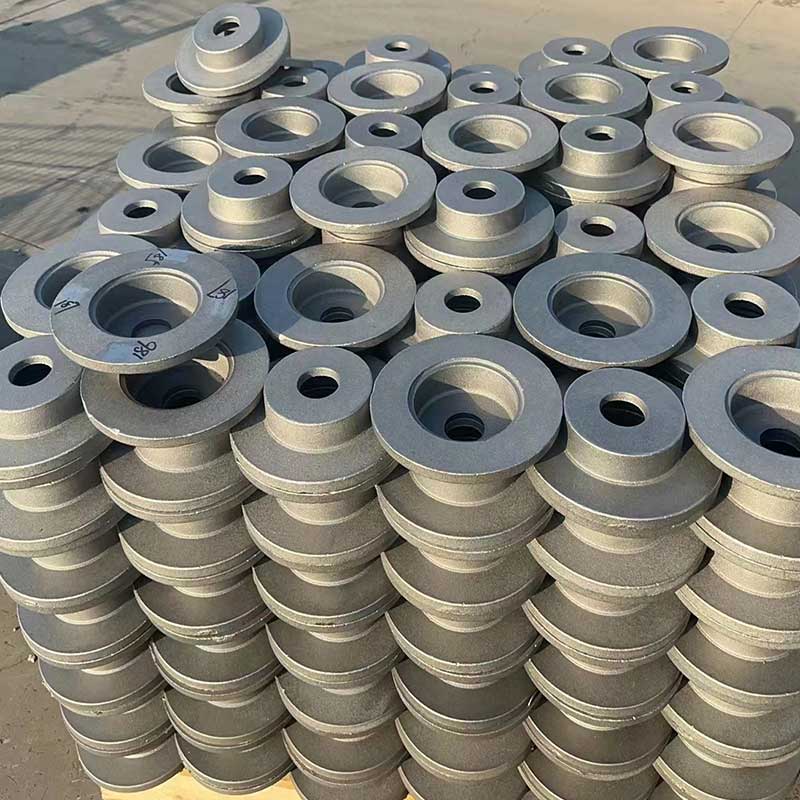
This process is applicable to QT400-18, QT600-3 ductile iron, gray cast iron, steel, aluminum and copper alloy castings, especially for integrated housings with complex multi-cavity structures. Dimensional accuracy CT7–CT9 and surface roughness Ra6.3–25 µm are achieved, which gives higher overall accuracy compared to clay casting, and surface quality under certain conditions is comparable to shell casting.
Basic principle of molding
A single block of polystyrene foam models (casting, gating system and profits glued into a single whole) is covered with a fire-resistant coating to insulate from dry sand and remove pyrolysis gases formed when the foam burns out. Dry sand does not contain clay, resins or other binders; loose grains of sand are compacted and fixed under the action of negative vacuum pressure, forming a rigid shape. When the high-temperature melt comes into contact with the foam, thermal cracking, evaporation and combustion of the EPS occurs. A large volume of gases is removed through the pores of the coating by a vacuum system. The melt continuously fills the mold cavity, replacing the volume of foam. After cooling, the vacuum is removed, the dry sand crumbles spontaneously, and the castings can be removed intact.
Raw material system
3.1 Materials for polystyrene foam models
EPS granules: standard for ductile iron, gray cast iron and aluminum castings with a density of 18–20 kg/m³. The granule size should not exceed 1/9 of the minimum casting wall thickness, the pre-foaming coefficient should be 40–60 times.
STMMA and EPMMA copolymer: used specifically for steel castings to reduce carburization defects on the surface of the castings.
3.2 Fireproof coating
Consists of refractory powder (quartz flour, bauxite, zircon powder), binder, suspending agent and functional additives. The coating is applied by brush or spray to the surface of the foam in 2-3 layers and completely dried in low-temperature ovens. It prevents metal penetration, supports foam models, directs pyrolysis gases and prevents sand from entering the mold cavity.
3.3 Dry foundry sand
Pure washed quartz sand, free of moisture, clay and resin binders. For ferrous metals, coarse sand is used, for aluminum alloys - fine sand. Waste sand is not contaminated by organic binders and can be regenerated an infinite number of times after screening and cooling.
Complete technological process
4.1 Manufacturing and assembly of foam models
EPS granules are pre-foamed, cured and molded into individual foam models; for small-scale products, models can be made on CNC machines from foam sheets.
Separate foam elements (casting, sprue bowl, feeders and profits) are glued together into a single model block to eliminate gaps at the joints.
4.2 Application of fireproof coating and drying
The entire model block is dipped or spray painted with a special coating for gasified models in 2-3 layers, then completely dried in low-temperature ovens. Residual moisture will cause gas pockets to form during pouring.
4.3 Three-dimensional vibration compaction in a vacuum flask
Installing the investment ring on a vibrating table, laying the bottom layer of sand 50–100 mm thick and compacting it by vibration;
Placing a completely dried foam model block inside the flask; layer-by-layer backfilling with dry sand with synchronous triaxial (X/Y/Z) vibration for 30–60 seconds to completely fill all internal cavities, ribs and small holes;
Sealing the upper part of the flask with plastic film and connecting a vacuum pump, stabilizing the negative pressure at the level of -0.04...-0.08 MPa; atmospheric pressure fixes the loose sand into a rigid shape.
4.4 Filling with continuous evacuation
A vacuum is maintained while molten iron, steel or aluminum is poured evenly. The foam is continuously gasified, and the vacuum synchronously removes the cracking flue gases, ensuring stable filling of the mold until the profits are completely filled.
4.5 Cooling, flask tipping and knocking out
After the castings have completely solidified and cooled, the vacuum is turned off and the negative pressure is removed. The flask overturns; unbound dry sand crumbles spontaneously, separating from the castings. The waste sand is sieved, cooled and returned to the next production cycle.
4.6 Cleaning and heat treatment
Removal of integrated foam sprues and pads, shot blasting to remove coating residue from surfaces. Ductile iron castings (QT400-18, QT600-3) are annealed or normalized as required, after which they undergo dimensional and mechanical properties control and are sent for storage.