
-


-


-


-


WeChat

-
whatsapp

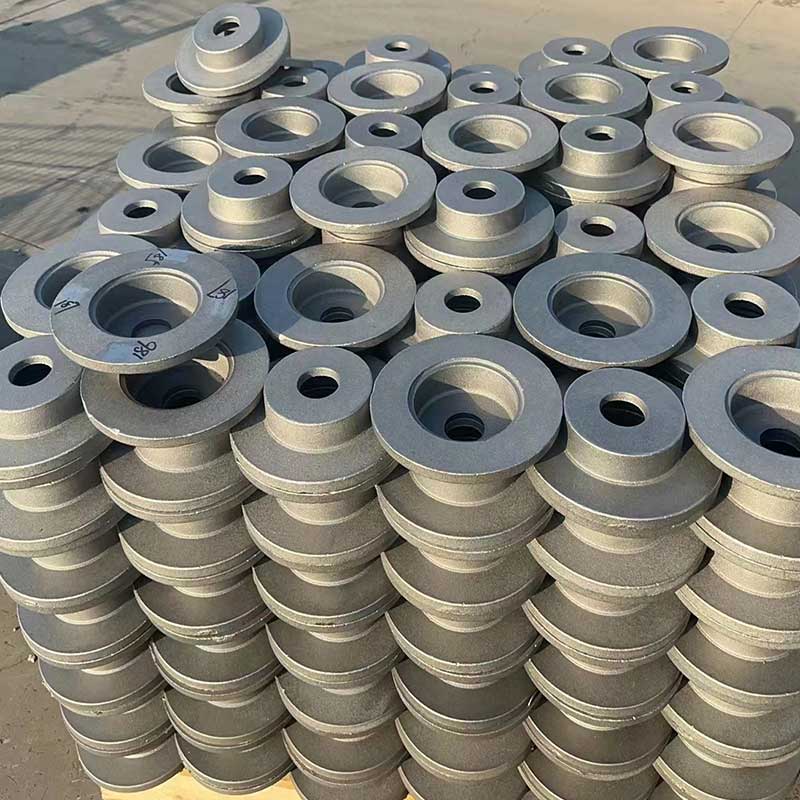
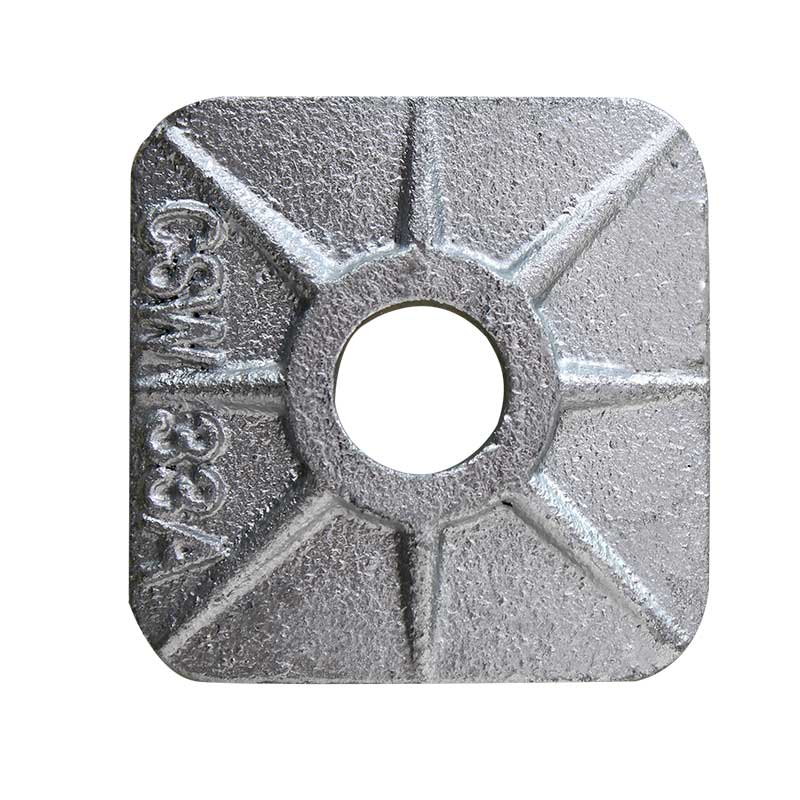
OEM CAST IRON SAND CASTING / CAST IRON PARTS #QT400-18: HIGH VISCOSITY FERRITIC DUCTILE CAST IRON
2026-06-23
QT400-18 is a typical ferritic ductile iron with nodular graphite, which is based on a ferrite matrix. It features outstanding low temperature toughness, good weldability and machinability.
Chemical composition control
To obtain a ferrite matrix with a high volume fraction of ferrite, it is necessary to strictly limit the elements that contribute to the formation of pearlite and provide a sufficient amount of graphitizing elements:
Carbon (C): 3.45%~3.64%. Increased carbon content promotes the release of graphite, reduces solid solution strengthening of the matrix and accelerates the formation of ferrite.
Silicon (Si): 2.47%~3.00%. Silicon is a strong graphitizing element which greatly increases the proportion of ferrite, but excess silicon degrades toughness so balanced control is necessary.
Manganese (Mn): 0.45%~0.57%. Manganese acts as a perlite stabilizer. QT400-18 requires a low manganese content to prevent the formation of pearlite or carbides and to ensure high elongation.
Sulfur (S) and phosphorus (P): are strictly limited to low levels (S ≤ 0.026%, P ≤ 0.060%). Sulfur consumes the spheroidizing modifier, and phosphorus tends to form brittle phases; both elements degrade viscosity.
Magnesium (Mg) and rare earth metals (Re): The residual magnesium content is controlled at 0.029%~0.062%, the residual rare earth content is 0.032%~0.047%, which guarantees the satisfactory sphericity of graphite.
Melting and modification (spheroidization)
Source materials: High-quality pig iron and steel scrap with low sulfur and phosphorus content are used.
Modifier (spheroidizer): Usually ferrosilicon is used with rare earth metals and magnesium. Considering the extremely high requirements for the viscosity of QT400-18, the degree of spheroidization of graphite should reach 1–2 levels, with small and well-rounded graphite inclusions.
Inoculation treatment: A ferrosilicon inoculant containing barium and calcium (such as SiBaCa) is used for late inoculation or in-mold inoculation to increase the number of graphite crystallization sites, avoid graphite flotation and improve the microstructure.
Heat treatment (key stage)
In the as-cast state, QT400-18 usually contains partial pearlite and cannot directly meet the 18% elongation requirement, so annealing is mandatory to achieve a fully ferritic matrix.
High temperature annealing (full ferritization)
Heating the casting to 920~980 °C and holding for 2–5 hours. This step decomposes eutectoid cementite and homogenizes austenite.
Then slow cooling with an oven to approximately 600 °C, followed by air cooling. Slow cooling in the eutectoid transformation range ensures complete diffusion of carbon into graphite inclusions and complete transformation of the matrix into ferrite.
Stress Relief Annealing
For complex-profile castings, exposure at 700~760 °C for 3–6 hours followed by cooling with a furnace to eliminate residual internal stresses and stabilize dimensional accuracy.