
-


-


-


-


WeChat

-
whatsapp

CASTING PROCESS USING GASIFICATION MODELS (SHELL CASTING)
2026-07-03
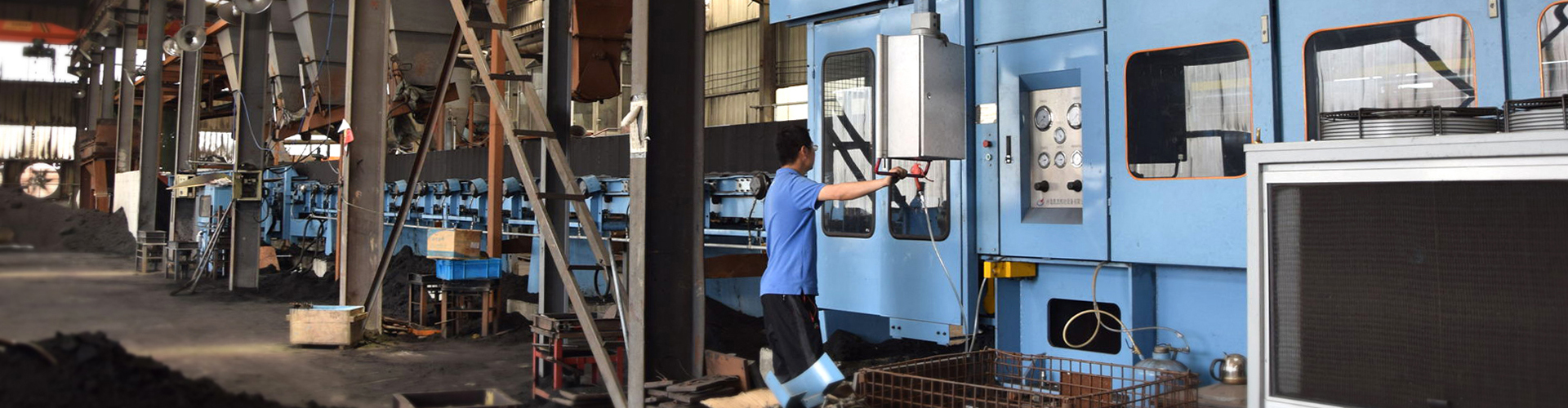
Shell casting is suitable for the high-volume production of small and medium-sized high-precision ductile iron, steel and aluminum alloy parts, including the high-volume production of precision valve bodies and gear housings made of QT400-18 and QT600-3 ductile iron. The dimensional accuracy and surface quality of castings produced by this process are significantly superior to those made using clay sand and conventional cold-set resin sand.
Principle of shell formation
Coated sand is made using a solid phenolic resin that is pre-coated onto sand grains. When dry coated sand comes into contact with hot metal tooling at temperatures of 180-250°C, the surface resin melts and undergoes a crosslinking reaction under the action of the hardener, forming a hard, infusible and insoluble thin shell of sand. Unheated loose sand can be regenerated and reused. During pouring, the thin shell heats up, the resin burns out and decomposes, and the mold spontaneously collapses, which ensures easy knockout and cleaning of the castings.
Raw material formulation for coated sand specifically designed for shell casting
Basic sand: rounded washed quartz sand with clay content ≤ 0.3%; For steel castings, zircon sand or chromite sand is used to prevent expansion defects.
Binder: thermoplastic phenolic resin added in an amount of 1.0–3.0% by weight of sand (especially for shell casting).
Hardener: hexamethylenetetramine (HMTA), added in an amount of 10–15% by weight of the resin.
Lubrication: calcium stearate to improve the fluidity of sand and prevent sticking to equipment.
Functional additives: low offgassing and anti-carburizing additives added in trace amounts as needed.
Key Difference: Cold hardening resin sand is mixed directly on site (base sand + liquid resin + hardener are mixed immediately before use). Coated sand for shell casting is a commercially produced dry sand; On-site only requires heat for molding, no resin mixing on site.
1 Preparing metal equipment
Precision-machined steel or aluminum alloy springforms feature built-in heating channels to maintain a constant temperature of 180–250°C. The accuracy of the equipment directly determines the dimensional tolerances of the castings, with shrinkage and machining allowances taken into account in advance.
2 Sanding and shell molding
Inverting the hopper to completely cover the surface of the hot metal tooling with coated sand.
Allow 60-120 seconds to cure the surface layer of sand on the tooling and form a uniform thin shell.
Turning the tool over and dumping unheated loose coated sand for complete recirculation, leaving only the hardened sand shell attached to the surface of the tool.
3 Secondary full cure
Thin sand shells are sent to the kiln for additional heating to complete cross-linking of the resin, eliminating internal stresses, preventing peeling and cracking during pouring, and increasing overall dry strength.
4 Shell removal, mold assembly and reinforcement
Removing the hardened sand shells from the tooling to obtain the upper and lower shell halves. Alignment, gluing and fixing the two halves. For castings with relatively thick walls, the shell mold is placed in a flask and filled with supporting filler to prevent the shell from expanding and deforming during pouring.
5 Melting and pouring
Molten cast iron, steel and aluminum alloy are poured evenly at specified process temperatures. The dense and smooth shell-shaped cavity features controlled gas release, which significantly reduces defects including blowholes, burn marks and metal penetration.
6 Cooling, knocking out and cleaning
After the castings have completely cooled, the resin film loses its adhesive strength due to carbonation at high temperatures, and the sand shell spontaneously collapses. Castings can be separated using vibration. After shot blasting, only a small amount of residual sand remains on the surfaces, which requires minimal machining allowance.
7 Waste sand regeneration
The waste sand is covered with carbonized resin residues, which must be removed by high temperature firing at temperatures above 700°C for regeneration. Reclaimed sand provides consistent performance, but the energy consumption and capital costs for reclaiming are higher than for clay sand.
Key Differences: Shell Casting vs. Conventional Cold Hardening Resin Sand
Curing mechanism:
Shell casting: thermal curing; rapid molding within seconds to minutes using hot metal molds.
Cold-hardening resin sand: chemical self-curing in the environment; curing at room temperature with catalysts, the molding cycle takes tens of minutes.
Shape:
Shell casting: thin hollow sand shell 6-20mm thick, extremely low sand consumption.
Cold-hardening resin sand: one-piece heavy form with high sand consumption.
Equipment:
Shell casting: high precision heated metal molds with high capital costs.
Cold-curing resin sand: Wood or metal molds are acceptable, no heating required.
Manufacturing Applicability:
Shell casting: automated lines for the serial production of small and medium precision parts.
Cold-hardening resin sand: single and small-scale production of large thick-walled castings.
Surface Accuracy:
Shell casting: tolerance class CT7–CT9, surface roughness Ra6.3–12.5 microns, clear formation of thin-walled complex internal cavities.
Cold-hardening resin sand: tolerance class CT9–CT11, surface quality inferior to shell casting.
Advantages of shell casting
1 High dimensional accuracy and excellent surface quality significantly reduce machining allowances and reduce machining costs.
2 Dry sand contains no moisture, minimizing gas hole defects in the mold cavity, ideal for precision parts such as hydraulic valve bodies and fluid passages.
3 Excellent knockout properties of sand shells eliminate sand sticking and clogging in difficult deep holes and shallow internal cavities, greatly improving cleaning efficiency.
4 High molding speed: each cycle takes only a few minutes, which is compatible with automated batch production.
5 Hardened sand shells can be stored for a long time without absorbing moisture or deforming, providing flexibility in production planning.
Process Limitations
1 The total cost of coated sand and heated metal molds is significantly higher than that of clay sand and cold-set resin sand.
2The limited structural strength of sand shells makes the process unsuitable for heavy castings with wall thicknesses greater than 50 mm.
3 During high-temperature decomposition of the resin, irritating flue gases are released, which requires the installation of auxiliary equipment to collect and purify the exhaust gases.
4 To regenerate waste sand, high-temperature roasting is required, which leads to high energy consumption and operating costs.
Typical Applications
Ductile iron parts (QT400-18, QT600-3): hydraulic valve blocks, gear housings, chassis brackets.
Automotive components: engine cylinder heads, intake and exhaust manifolds, oil seal seats.
Small and medium steel castings: valve bodies, precision pins for construction equipment.
Thin-walled precision aluminum alloy components: water pump housings, electric motor housings.